← My Projects

Software Factory

My delivery platform: an agile board where AI agents design, build and test, and I own the gates.

In my words

What I've learned

The processes, tools and patterns that work well for human software teams translate reasonably well to agent-first teams.

Managing many chat threads across models like Claude and Codex eventually breaks down, and chances are you, the human, are the bottleneck. I noticed my conversations in each thread drifting toward excessive shortcuts, too-quick thinking and occasional confusion as I crossed between them.

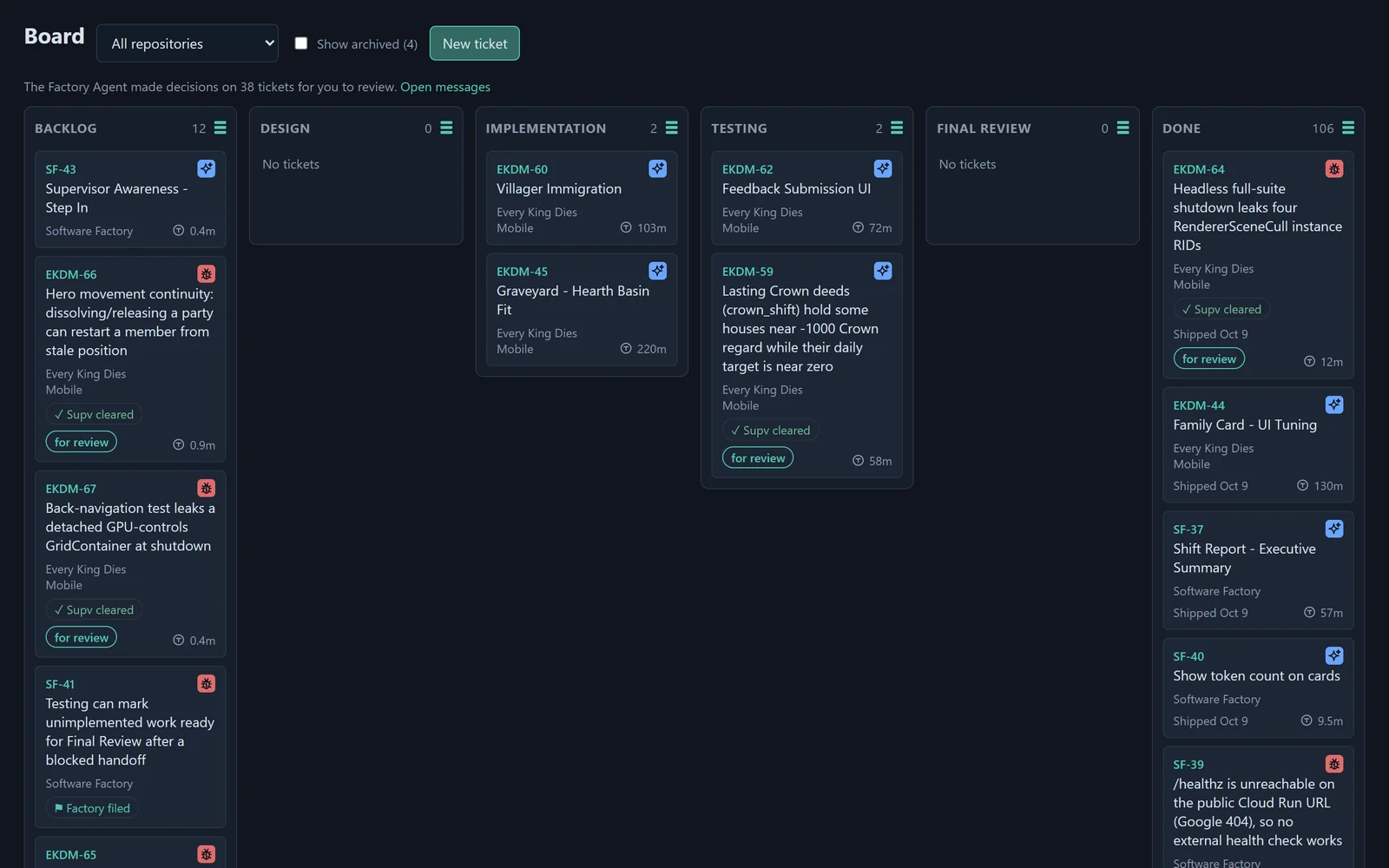
The processes I've championed my whole career are still critical in agentic development. Planning and design feed a better implementation plan, which feeds a better testing plan. Design, Implementation and Testing collaborating together still matters, whether the contributors are people or agents. So I built the same boards my human teams worked from, and taught my agents to respect the workflow whether the work looks like a quick bug fix or a heavy feature.

Communication stays transparent: every discussion, design revision, problem and outcome is stored and available to future work. The same processes, tools and philosophies that helped some human teams get better results are helping agent teams reach them too.

Why I built it

I spent 20 years in software development, most of it running boards and leading the teams that work them. I know what makes a delivery team effective: a clear process, written decisions, honest testing and a manager who is reachable without hovering.

Software Factory is my experiment in whether that same knowledge applies to agent delivery. It is also a real tool I need: it manages the work I pursue day to day and week to week across my projects.

What it is

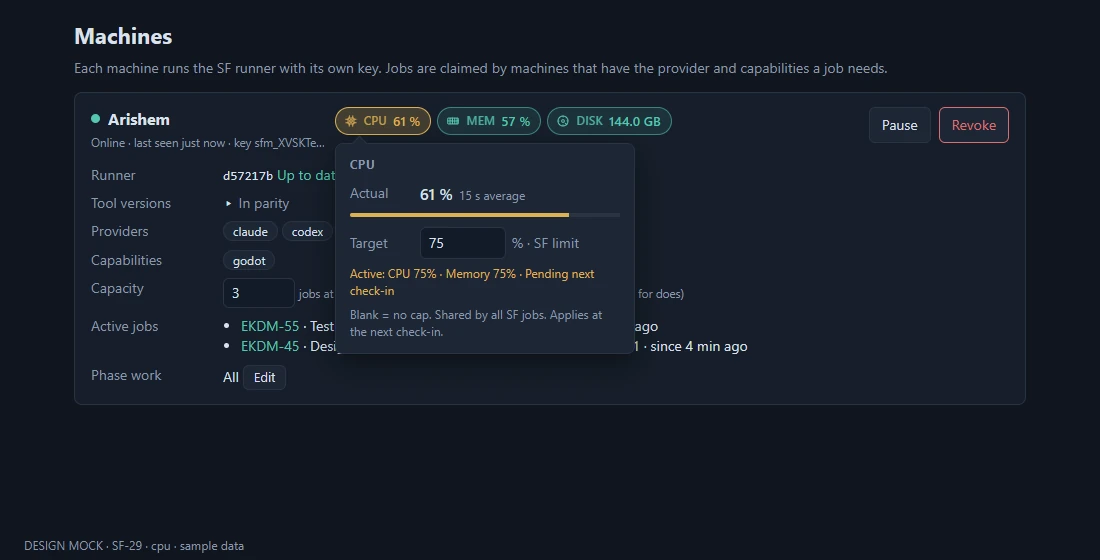
An agile board staffed by AI agents running on my own PCs. Claude and Codex agents work Design, Implementation and Testing; I approve designs and promote finished work. Every decision lands in a thread I own, and every project keeps its own memory.

It builds Upwardly Math and Every King Dies, and it builds its own improvements from tickets I file.

Where it stands

In daily use across all three projects. It is private: I don't plan to sell it or open source it, because I believe most teams could build their own. I'm always happy to talk through how it works and how the ideas might fit your team.

Stories